Your edge in the AI era
Hello!
I hope you’re having a good week. Sorry for the delay in sending this newsletter - it's been a busy couple of weeks hosting a few fireside chat events (the inspiration for this email) and journeying to Australia.
In my Friday career advice sessions recently, one theme keeps coming up:
“How do I optimise my career as AI improves?”
It’s usually asked slightly differently each time — but that’s the essence of it.
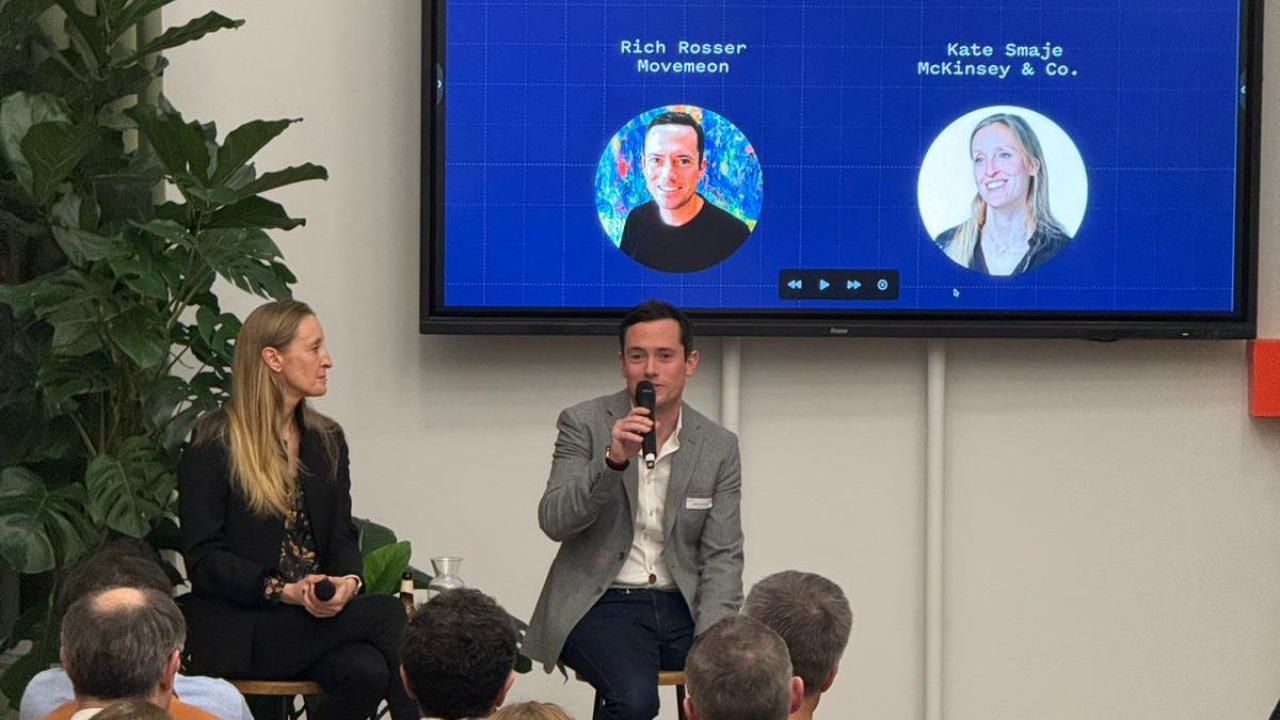
So I thought I’d share a few reflections from a recent fireside chat I hosted with Kate Smaje (Senior Partner at McKinsey, leading their global AI work), and what it practically means for your career.
- - -
A quick story
One moment from the discussion stuck with me.
Someone in the audience asked: “If intelligence becomes cheap… what becomes scarce?”
Kate’s answer was simple:
Trust.
And the more I’ve thought about it, the more I think that’s exactly right.
- - -
What actually changes for your career
If we strip away the noise, a few things feel very clear:
- Being “good and efficient” is less distinctive
- Producing solid analysis or a decent deck is becoming easier
- More people can now get to a competent first answer
Which means your edge shifts.
Not disappears — but shifts.
- - -
Where your value moves
In practical terms, value moves up the stack:
- Judgement — knowing what matters (and what doesn’t)
- Prioritisation — focusing effort in the right places
- Communication — making things land clearly
- Decision-making — being willing to act without perfect data
These were always important.
They’re now becoming decisive.
- - -
The human bit (this really matters)
The strongest theme from our discussion is this:
The more AI shows up, the more human qualities matter.
These qualities are what makes us distinct. Our moat that AI can't cross.
Things like:
- Trust — do people rely on your judgement?
- Authenticity — do people believe you?
- Empathy — can you read a room and respond well?
- Calmness — can you operate well in ambiguity?
- Curiosity — are you always striving to learn and unlearn?
- Accountability — do you define the line and hold it?
These are not “nice to have”.
They’re increasingly where senior careers are built.
- - -
How to actually use AI (well)
There’s also a practical divide emerging.
Some people are using AI to avoid thinking.
Others are using it to think better.
The difference is huge.
Used well, AI should help you:
- Test ideas faster
- Pressure-test your thinking
- Explore more options
- Spend more time on higher-quality output
A simple question I’ve been asking myself:
Is this making my work more generic… or more distinctive?
- - -
Learning speed is becoming a real advantage
One other point Kate made that really landed:
The people who will win are the fastest learners.
Not the ones who know the most today.
But the ones who can:
- Learn quickly
- Unlearn when needed
- Stay curious
- Adapt without ego
- - -
So what should you do?
If I boil this down into something practical:
- Use AI — properly and regularly
- Don’t outsource your thinking
- Invest in judgement and communication
- Build trust and authenticity consciously
- Treat learning speed as a skill
And perhaps most importantly:
Work out what is genuinely distinctive about you.
Because if more people can produce good work…
The people who stand out will be those others trust, remember, and want to work with again.
In the era of AI, re-embracing what makes us distinctively human is our north star.
- - -
So maybe the question to leave you with is this:
As AI gets better…
What do you want to become known for?
Best wishes,
Rich
ps. If this is something you’re actively thinking about, it’s a topic that comes up a lot in the Friday career advice sessions — always happy to explore it with you.
